
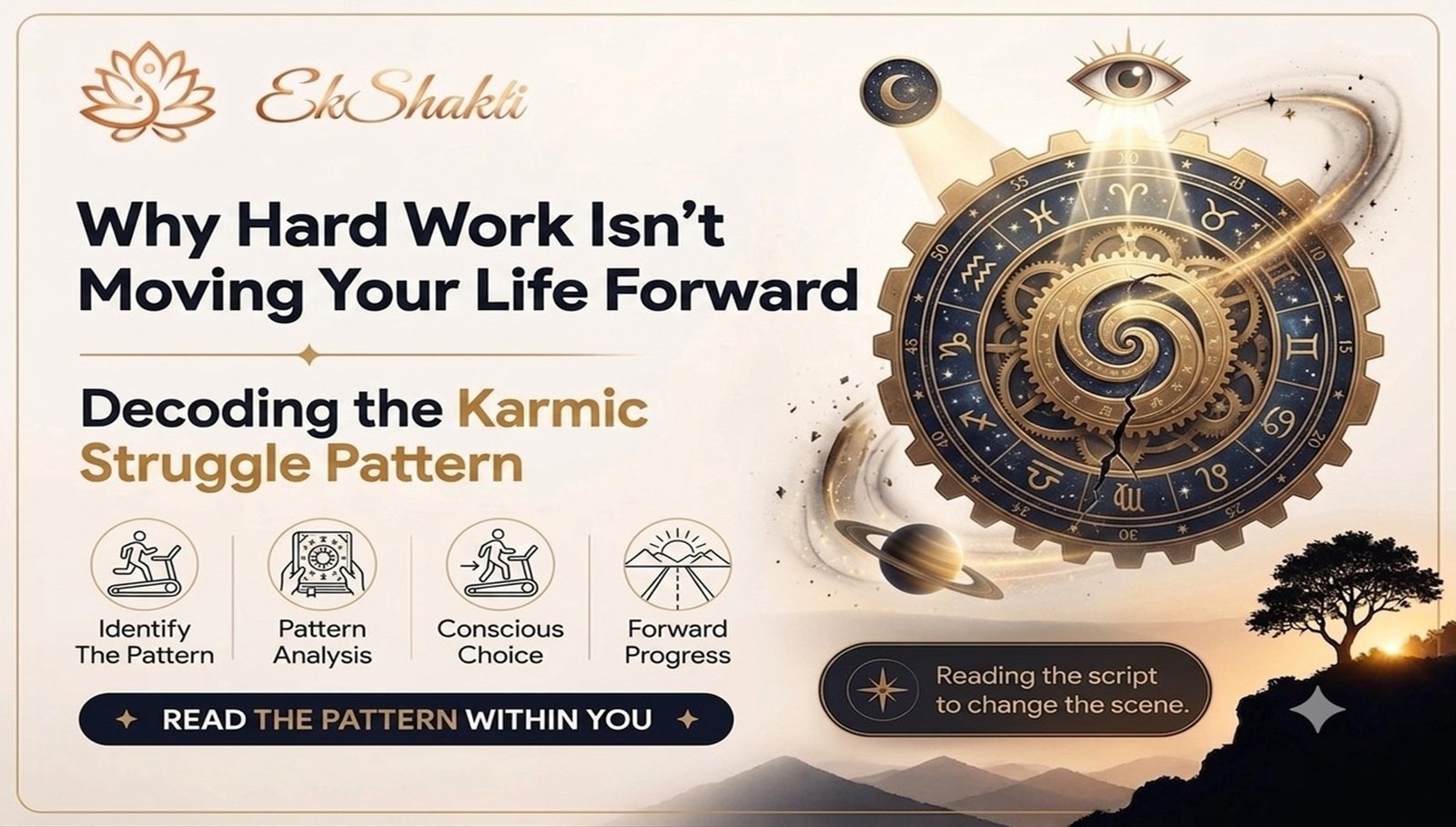

It’s 2 AM, and you’re lying awake doing the math again. The hours you’ve put in. The sacrifices nobody saw. The way you show up early, stay late, say yes when you wanted to say no — and somehow, someone who works less than you just got the promotion, the client, the opportunity you’d been quietly hoping was yours.
You don’t say this thought out loud, because it sounds petty when you do. But at 2 AM, in the dark, it’s honest: why is hard work not paying off for you the way it seems to for everyone else?
This isn’t a productivity problem. It isn’t a “try harder” problem. And it almost certainly isn’t a talent problem either. What you’re describing has a name, and once you understand it, the quiet humiliation of watching others get ahead — in career, in marriage, in the milestones you’ve been working toward — starts to make a different kind of sense.
The Comparison Nobody Talks About
There’s a specific kind of exhaustion that comes from working hard but not getting results — not the physical tiredness of long hours, but the emotional fatigue of watching your effort seemingly count for less than someone else’s.
What This Actually Looks Like
- 1You take on the harder project because you know you’ll do it well — and someone else gets credited for the outcome.
- 2You stay consistent for years while a colleague’s shortcut gets rewarded faster than your discipline.
- 3You show up prepared, professional, and reliable — and still get passed over for people who show up with less and receive more.
- 4You’ve stopped mentioning your effort out loud, because saying “I work so hard” started to feel like an excuse instead of a fact.
- 5You’ve been the steady, committed one in every relationship, and yet marriage or lasting partnership keeps arriving for others faster, and easier, than it has for you.
- 6You’ve saved diligently, researched every option, and done everything “right” — and still watched someone less prepared close on a home while your own attempts keep falling through.
Zoomed out, it isn’t just one area. Career, relationships, finances, milestones — it can feel like life as a whole keeps handing other people an easier path, no matter how much more consistently you show up for yours.
“This is the comparison nobody says at dinner parties. It’s exhausting precisely because it doesn’t make logical sense — you did everything ‘right,’ and the results still didn’t follow.”
— Jaya Karamchandani, EkShaktiFeeling Stuck in Life Despite Trying
If you’re feeling stuck in life despite trying, it’s worth pausing on that phrase, because it’s more precise than “unlucky” or “unmotivated.” Stuck implies movement is happening — effort, motion, forward intention — but something is preventing that motion from translating into visible progress.
The Difference Between Struggling and Being Blocked
Struggling
Usually has an identifiable cause — wrong strategy, wrong skillset, wrong market. You can problem-solve your way out, because the obstacle is visible.
Being Blocked
What happens when you’ve corrected the strategy, upgraded the skillset, and changed the approach — and the outcome still doesn’t shift. That’s a pattern problem.
That’s not a logic problem anymore. That’s a pattern problem, and it points toward something numerology calls a Karmik struggle.
Karmik Struggle Meaning — Why Effort Doesn’t Always Equal Outcome
Understanding the Karmik struggle meaning behind repeated setbacks requires letting go of one assumption most people carry without questioning it: that effort and outcome are supposed to be directly proportional. In most of life, they are — but not always, and not for everyone, and not in every season.
A Karmik struggle pattern is a specific kind of imbalance carried into this life path, often tied to a person’s birth numbers, that creates resistance in a particular area — frequently career, recognition, or financial stability — regardless of how much genuine effort is applied there.
Why This Isn’t About Being “Cursed”
This isn’t a life sentence, and it isn’t punishment. A Karmik struggle pattern is closer to a specific lesson still being worked through — often related to timing, recognition, or how a person receives credit and reward. It shows up as effort that seems to disappear into a void, rather than effort that compounds visibly like it does for other people.
Once this pattern is identified, it stops feeling like personal failure and starts looking like something structural — something that can actually be worked with, rather than endlessly pushed against.
Why Am I Not Progressing in Career?
This is often the most painful version of the question, because career progress is so visible, so comparable, and so tied to self-worth in most people’s minds. Why am I not progressing in career the way peers with similar or lesser effort seem to be?
Common Patterns Behind Career Stagnation
The “Almost There” Pattern
Opportunities build momentum and then stall right at the final stage — the shortlist, the final round, the verbal agreement that doesn’t convert.
The Invisible Effort Pattern
Work gets done well but somehow doesn’t get noticed by the people who make decisions about advancement.
The Right Time, Wrong Door Pattern
Good opportunities appear, but consistently through channels that don’t lead anywhere, while the “real” opportunity stays just out of reach.
The Credit-Drift Pattern
Ideas, effort, or solutions get absorbed into someone else’s success story rather than your own.
None of these are about competence. They’re about a specific pattern repeating across different jobs, different companies, sometimes different industries — which is precisely the signature of a Karmik block rather than a coincidence of circumstance.
Numerology for Career Blocks — Reading the Pattern Instead of Guessing at It
This is where numerology for career blocks becomes genuinely useful, because it replaces guesswork with structure. Rather than wondering vaguely why things “never work out,” a numerology analysis can point to the specific number pattern in someone’s chart connected to career timing, recognition, and financial flow — showing where the resistance is actually rooted.
What a Career-Focused Numerology Reading Typically Reveals
- 1Whether the current life phase favors visibility or requires patience before recognition arrives
- 2Which specific Karmik number pattern is tied to repeated stalling or being overlooked
- 3Whether the block is more connected to timing, to how effort is being channeled, or to an underlying self-worth pattern
- 4Practical, specific adjustments — not just “wait it out,” but where and how to redirect effort so it actually compounds
This is the kind of pattern-reading work Jaya Karamchandani focuses on through EkShakti — treating a numerology chart less like a horoscope and more like a diagnostic tool for understanding exactly why certain kinds of effort keep hitting the same invisible ceiling. Broader research on the psychology of unrecognised effort, such as the American Psychological Association’s coverage of workplace psychology, similarly points to structural and perceptual factors — not just individual performance — as drivers of who gets recognised and who doesn’t.
When the Same Pattern Shows Up in Marriage and Relationships
Career isn’t the only place this shows up — often, the exact same pattern quietly repeats in marriage and relationships, and it can feel even more confusing there, because it’s harder to measure “effort” the way you can measure a promotion or a client win.
What a Relationship Karmik Block Can Look Like
- 1You’re the one who keeps the relationship steady — remembering, planning, repairing — while the effort goes unnoticed or unreciprocated.
- 2Marriage conversations or proposals keep stalling at the same emotional stage, across different relationships, for reasons that never quite add up.
- 3You do the emotional work — therapy, communication, patience — and the relationship still circles back to the same disconnect.
- 4You watch people who seem to “try less” settle into stable, easy partnerships, while your own efforts toward the same goal keep meeting quiet resistance.
Just like career stagnation, this isn’t a reflection of being unlovable or doing something wrong. It’s frequently the same Karmik struggle pattern, simply showing up in a different area of life — one tied to how effort, connection, and commitment are able to actually land and take root, rather than how much of it exists in the first place.
Feeling Stuck Around Buying a Home or Major Life Decisions
The pattern also tends to surface around big, high-stakes decisions — buying a home, relocating, starting a family, or committing to a major financial step. These moments amplify the feeling of being stuck, because so much is riding on the outcome, and the stakes make the delay feel even more personal.
How This Shows Up in Practice
- 1A home purchase falls through at the final stage more than once, for reasons that seem unrelated each time.
- 2Financing, paperwork, or timing keeps derailing a decision you’ve otherwise prepared thoroughly for.
- 3You feel ready to move forward on a major life step, yet something — timing, circumstance, hesitation — keeps pushing it just out of reach.
- 4Looking back, you notice this isn’t the first big decision that’s stalled this way; it’s a pattern across several major life moments, not a single unlucky event.
Zoomed out even further, this same thread often explains why life as a whole can feel like it’s not moving, even when individual pieces — career, relationships, home, health — each seem to be “worked on” diligently. When a Karmik pattern is rooted deeply enough, it doesn’t confine itself to one area; it surfaces wherever a major decision or milestone requires things to click into place finally.
What to Do When Hard Work Isn’t Enough
If you’ve recognised yourself in any of this so far, here’s the more useful question: not “why is this happening,” but “what actually changes it.”

Three Shifts That Matter More Than Working Harder
Stop increasing effort in the same direction
If a pattern has repeated across multiple roles or projects, doing more of the same thing faster rarely breaks it. The block isn’t a volume problem.
Look for the pattern’s specific shape
Is it always right before recognition? Always tied to a particular kind of relationship or authority figure? Always around a certain time of year or stage of a project? The shape of the pattern is often more revealing than the pattern itself.
Address the root, not the symptom
A new job, a new manager, or a new city can feel like progress, but if the underlying Karmik pattern hasn’t shifted, the same struggle tends to follow in a new setting.
This is precisely why so many capable, hardworking people cycle through multiple “fresh starts” that all eventually produce the same familiar frustration — the setting changes, but the pattern doesn’t, until it’s actually seen and worked with directly. This is also the thinking behind SoulOS, EkShakti’s structured system for identifying and dismantling exactly this kind of recurring block.
The Quiet Relief of Finally Understanding Why
There’s a specific kind of relief that comes from realizing a struggle isn’t a character flaw. It’s not laziness, it’s not bad decisions, it’s not “not wanting it enough.” It’s a pattern — and patterns, unlike personal failings, can actually be read, understood, and worked with.
“Believing the problem is personal failure keeps someone stuck in self-criticism. Understanding it as a nameable pattern shifts the entire posture — from ‘what’s wrong with me’ to ‘what’s the actual structure here?'”
— The core reframe behind a Karmik struggle patternThis reframe matters more than it might initially seem. At EkShakti, this is the foundation of the work Jaya Karamchandani does with clients navigating exactly this kind of stuck career pattern — not offering false reassurance, but mapping the specific Karmik and numerological structure behind why effort hasn’t been translating into visible progress, and what shifts that.
Final Thoughts
The 2 AM math you keep doing — the hours, the effort, the comparison to people who seem to be moving faster with less, whether it’s a career milestone, a marriage that keeps stalling, or a home purchase that never quite closes — isn’t proof that you’re doing something wrong. It’s evidence of a pattern that hasn’t been fully understood yet.
Hard work matters. It always will. But when hard work consistently fails to produce the outcome it should, the missing piece usually isn’t more hours or more discipline. It’s clarity about the specific structure creating the resistance — and once that structure is named, it stops being an invisible force working against you and starts being something you can actually navigate.
If you’ve been quietly asking yourself why is hard work not paying off, the answer isn’t that you need to work harder. It’s that you need to finally see the pattern clearly enough to work with it instead of against it.
For general background on how effort and reward are studied across career psychology, Britannica’s overview of workplace and industrial relations offers useful context — though a personalised numerology reading will always reveal what a general framework cannot.
Ready to See the Actual Structure?
A personal numerology reading with Jaya Karamchandani can map exactly where your career, relationship, or major-decision pattern is rooted — and what it takes to finally move it.
Frequently Asked Questions
When consistent effort doesn’t translate into visible results, it’s often because a specific Karmik or numerological pattern is creating resistance in that area of life — commonly around career recognition or financial flow — rather than any lack of ability or effort on your part.
Feeling stuck despite trying usually means effort and motion are happening, but something underlying is preventing that effort from converting into visible progress. This is different from ordinary struggle, which typically has a clear, fixable cause.
Karmik struggle meaning refers to an imbalance carried into a person’s current life path — often connected to their birth numbers — that creates resistance in a specific area of life, regardless of how much genuine effort is applied there.
Career stagnation despite strong effort often follows a specific repeating pattern — such as opportunities stalling near completion or contributions going unrecognized — which points to a Karmik block rather than a lack of competence.
Numerology for career blocks analyzes a person’s chart to reveal specific timing and pattern information connected to recognition, career flow, and financial stability, helping pinpoint the structural cause behind repeated stagnation rather than leaving it to guesswork.
Not usually. Increasing effort in the same direction tends to reinforce the existing pattern rather than resolve it. Lasting change typically requires identifying the specific structure behind the block and addressing it directly.
Jaya Karamchandani offers personalized numerology readings that map the specific Karmik pattern behind stalled career progress, helping clients understand exactly where the resistance originates and what practical shifts can help move it forward.